
18.3.2026
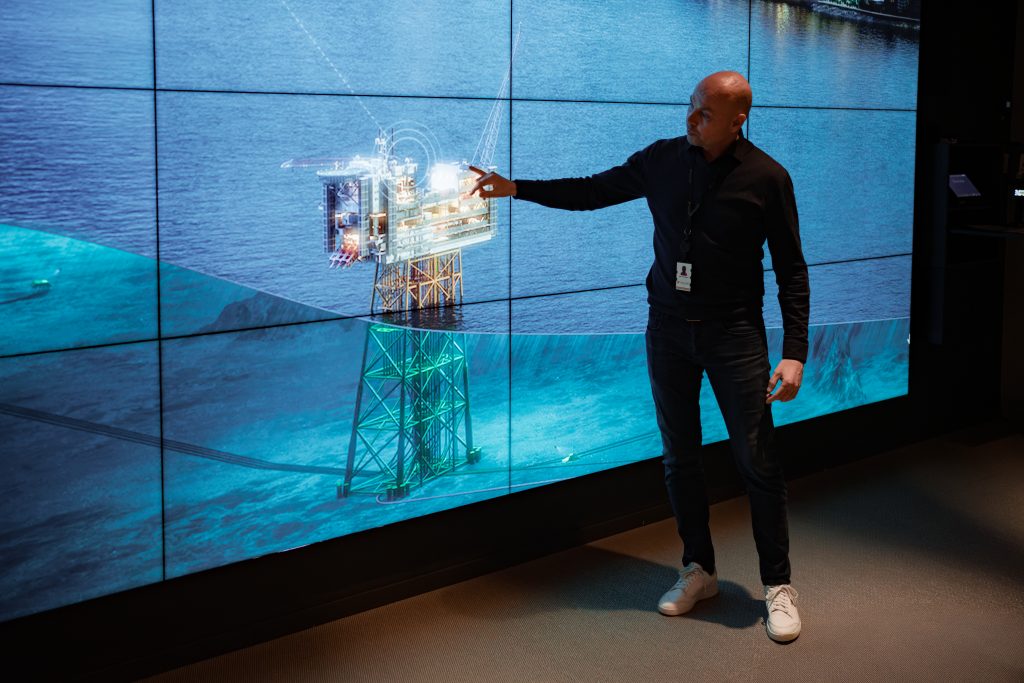
A high-quality visual video wall can enhance any control room, operations space, meeting room and experience centre. Our goal is to enhance your understanding about two common types of display solution; LCD and LED, and increase your chances of making the right choice for your company’s needs.
Firstly, both LCD and LED video walls can deliver excellent results, but they are built differently, look different in real life, and have different implications for installation, service, and long-term use.
Here are some factors first-time buyers typically need to understand before speaking to vendors or writing requirements for their video wall. The most important thing at this stage is that you should not start by choosing a display technology. Start by defining what people must be able to see, from where, under what lighting, and during what scenarios.
An LED video wall is built from LED modules that connect to form one continuous display surface. Instead of separate panels with frames, the wall becomes a large canvas. In many cases, it appears seamless, meaning there are no visible bezel lines interrupting the image.
LED video walls are often chosen when the wall must deliver a premium, high-impact visual experience, or when uninterrupted viewing is important for situational awareness and decision-making.
A simple way to think about the difference: LCD video walls are made of tiled screens. LED video walls are made of connected display modules that can behave like one big screen.
An LCD video wall is created by combining multiple LCD panels into one large display surface. The panels are mounted in a grid (for example, 2×2, 3×3, or wider layouts), and the combined image is split across the screens.
The key characteristic of an LCD video wall is the bezel. A bezel is the frame around each panel. When panels are tiled together, the bezels create visible lines across the overall image.
LCD video walls are a mature, familiar technology and can be a cost-effective way to build a large-format display. This makes them a popular choice. They can work very well in environments where operators sit at a reasonable distance and where the bezel lines do not interfere with the type of content being shown.
Will your video wall be used to show maps, detailed dashboards, or content where a line through the middle could hide key information? If so, bezels can become a real drawback. Some teams can work around it by designing layouts carefully, but it is still a limitation you should account for early.
Most first-time buyers focus on image quality first, but the day-to-day realities of installation, reliability, and maintenance are just as important. The “best” video wall is the one that fits your room, can be serviced efficiently, and stays reliable over time.
Room layout: Where people sit or stand, and how far they are from the wall.
Viewing angles: Whether users need a clear view from the sides.
Ambient light: Bright rooms may require different brightness targets.
Power and heat: Larger walls require planning for power availability and thermal conditions.
Mounting and structure: Size and weight may impact mounting requirements.
Reliability is not only about the display technology. It is also about the full solution around it: signal distribution, switching, control, cabling, network dependencies, and how the system is operated.
Service access: How quickly components can be reached and replaced.
Spare parts strategy: What you keep on-site and what lead times look like.
Monitoring: Whether problems are detected proactively or only when users complain
Before choosing LED or LCD, answer these questions:
If the video wall will run around the clock, the decision should include more than just “LCD vs LED.” For 24/7 environments, success depends on designing the solution for continuous operation, fast recovery, and predictable performance.
In general, both LCD and LED video walls can be used in 24/7 environments when they are specified correctly and supported by an operational plan. The more mission-critical the room is, the more you should prioritize serviceability, monitoring, and a clear support model alongside display choice.
The fastest way to decide between LCD and LED is to match the technology to your priorities. Use this simple comparison matrix as a starting point.
Key aspects Type
LED
LCD
Display surface
Seamless or near-seamless canvas
Tiled screens with visible bezels
Impact of lines on content
No bezel lines, easier to present uninterrupted content
Bezels can cut through maps, dashboards, or camera views
Typical viewing distance
Can work across distances when specified correctly
Often best from moderate to longer distances
Room impact and visual “presence”
High-impact, premium look and feel
Professional, familiar look
Brightness and viewing angles
Often strong brightness performance and wide viewing angles
Good, but may be limited in very bright spaces depending on model
Maintenance approach
Module-based servicing; serviceability depends on wall design
Panel-based servicing; alignment and bezel uniformity matter
Upfront costs
Often higher (but depends heavily on size and specification)
Often lower
Best fit
Mission-critical control rooms, briefing spaces, high-visibility collaboration
Cost-sensitive control rooms, meeting spaces, general enterprise needs
Choose a LED video wall if you need a seamless canvas to avoid visual interruption and you want a premium, high-impact display surface.
Choose a LCD video wall if you need a proven, cost-effective large display and bezel lines are not a problem for your content.
LED video walls use connected modules that create a seamless or near-seamless canvas. LCD video walls are tiled panels with visible bezels.
Choose LED when you need uninterrupted visuals, premium impact, and strong viewing angles/brightness.
Choose LCD when you want a proven, cost-effective large display and bezel lines won’t hurt your content.
Bezels can cut through maps, dashboards, or camera views and hide critical details.
No. Start by defining what must be visible, from where, and under what lighting and scenarios.
Seating/standing distance, viewing angles, ambient light, power/heat, and mounting constraints.
Both can work 24/7 if specified correctly, with monitoring, service access, and a clear support plan.
With our high-end visualization and unified communication systems, Cyviz control rooms can be used for national intelligence, space programs and other special operations.