
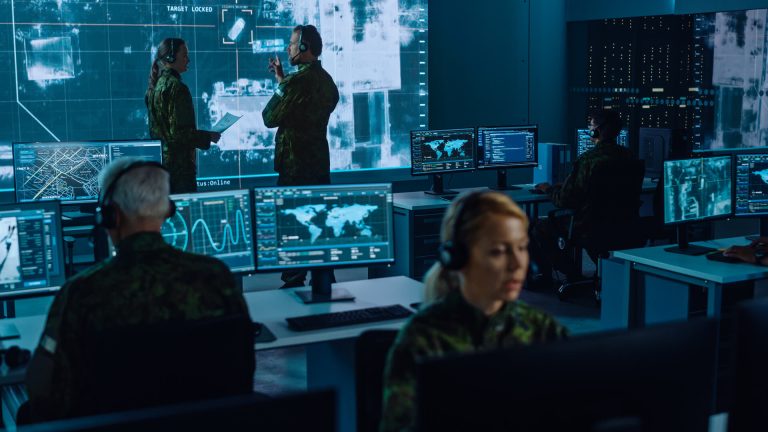
A crisis can escalate in minutes. A cyberattack triggers hundreds of alerts. A power disruption generates cascading notifications. A security incident floods the environment with reports, messages, video feeds, and status updates. Within minutes, decision-makers are surrounded by data yet still struggle to answer the most important question: What is happening right now?
In mission-critical environments, the difference between a well-managed incident and an escalating crisis is often not access to information. It is the ability to quickly create a shared understanding of the situation so people can act.
As organizations become more connected, operations more distributed, and risks more complex, situational awareness has emerged as one of the most important capabilities in crisis response.
“The mission is not to put more information on more screens. It is to ensure the right people have the right information at the exact moment they need to act.”, says John van Laerhoven, Regional Director, Cyviz.
Most organizations already have access to more data than they can effectively process.
Security systems, operational platforms, sensors, business applications, communication tools, and external information sources all generate valuable insights. The challenge is bringing these inputs together into a coherent operational picture that people can trust.
When incidents occur, teams rarely struggle because they lack information.
They struggle because information exists in too many places.
Different departments see different dashboards. Different stakeholders operate on different assumptions. Teams delay critical decisions as they try to validate information, align interpretations, and build a shared understanding of events.
This fragmentation creates friction precisely when speed matters most.
“More often, organizations struggle to consolidate information from multiple systems, establish a common understanding of the situation, and coordinate decisions across teams and locations.”, says James Munt, Sales Director Defense, Cyviz.
The organizations that respond most effectively are often not those with the most technology, but those that can rapidly create a shared operational picture across people, systems, and locations.
For decades, people viewed command and control environments primarily as physical spaces. Today, they are increasingly recognized as operational platforms.
Their purpose is not simply to display information but to enable decision-making.
Whether supporting security operations, critical infrastructure, transportation networks, defense organizations, or emergency response teams, the objective remains the same:
Provide decision-makers with a trusted view of the situation and enable coordinated action.
This concept, often called a Shared Operational Picture, has become central to modern crisis management. When everyone works from the same information, organizations reduce uncertainty, improve coordination, and accelerate decision-making.
Without it, teams risk reacting to different versions of reality.
Historically, command centers were tied to a specific room, building, or facility. That model is changing.
Today, crisis response frequently involves stakeholders joining from headquarters, regional operations centers, field locations, remote workplaces, or mobile deployments. Operational continuity can no longer depend on everyone being physically present in the same location.
As a result, resilience increasingly depends on maintaining a consistent operational experience regardless of where people are located.
This is one reason organizations are moving toward software-defined, standardized environments that can be replicated across sites. Standardization reduces complexity, accelerates deployment, and improves operational readiness.
Teams responding to a crisis should not have to learn new tools or adapt to unfamiliar workflows. The technology should feel invisible; the experience should be intuitive.
And the operational picture should remain consistent.
The future of crisis management is unlikely to be entirely physical or entirely digital. Instead, organizations are building hybrid command environments that combine dedicated operational spaces with secure participation from distributed experts.
Advances in cloud infrastructure, networking, and collaboration technologies have made it possible to extend operational capabilities across a much wider footprint than before. This allows organizations to bring the right expertise into critical situations without being constrained by geography.
A cybersecurity expert can contribute from a remote location. An operations manager can participate from another country. An executive team can maintain visibility without entering the command center itself.
The question is no longer where people are located, but whether they can access the same information, share the same understanding, and participate in decisions securely and effectively.
Many organizations still evaluate command-and-control investments through a technology lens. How quickly can you build a room? How large is the video wall? How many information sources can be displayed?
These questions matter. But they miss the more important measure of success: the true test is how quickly an organization can move from uncertainty to understanding.
How quickly can decision-makers establish situational awareness? How quickly can teams coordinate actions? How quickly can the organization begin responding with confidence?
“Success should not be measured by how quickly screens are installed, but by how quickly an organization can establish a shared operational picture and begin making informed decisions.”, says John van Laerhoven.
That shift in thinking is transforming how organizations approach operational readiness across defense, energy, transportation, critical infrastructure, and public sector environments.
The discussion is no longer about AV technology in isolation. It is about enabling better decisions when the stakes are highest.
In a crisis, organizations do not need more information. They need a shared understanding of what matters and what to do next.
Modern command-and-control environments connect people, information, and workflows into a shared operational picture that supports faster, more confident decisions.
Because when every second counts, clarity becomes the ultimate competitive advantage.
With our high-end visualization and unified communication systems, Cyviz control rooms can be used for national intelligence, space programs and other special operations.